Each-Way Edge Exposed: Bookies' Place Terms That Punters Chase in UK Horse Racing
Each-Way Edge Exposed: Bookies' Place Terms That Punters Chase in UK Horse Racing
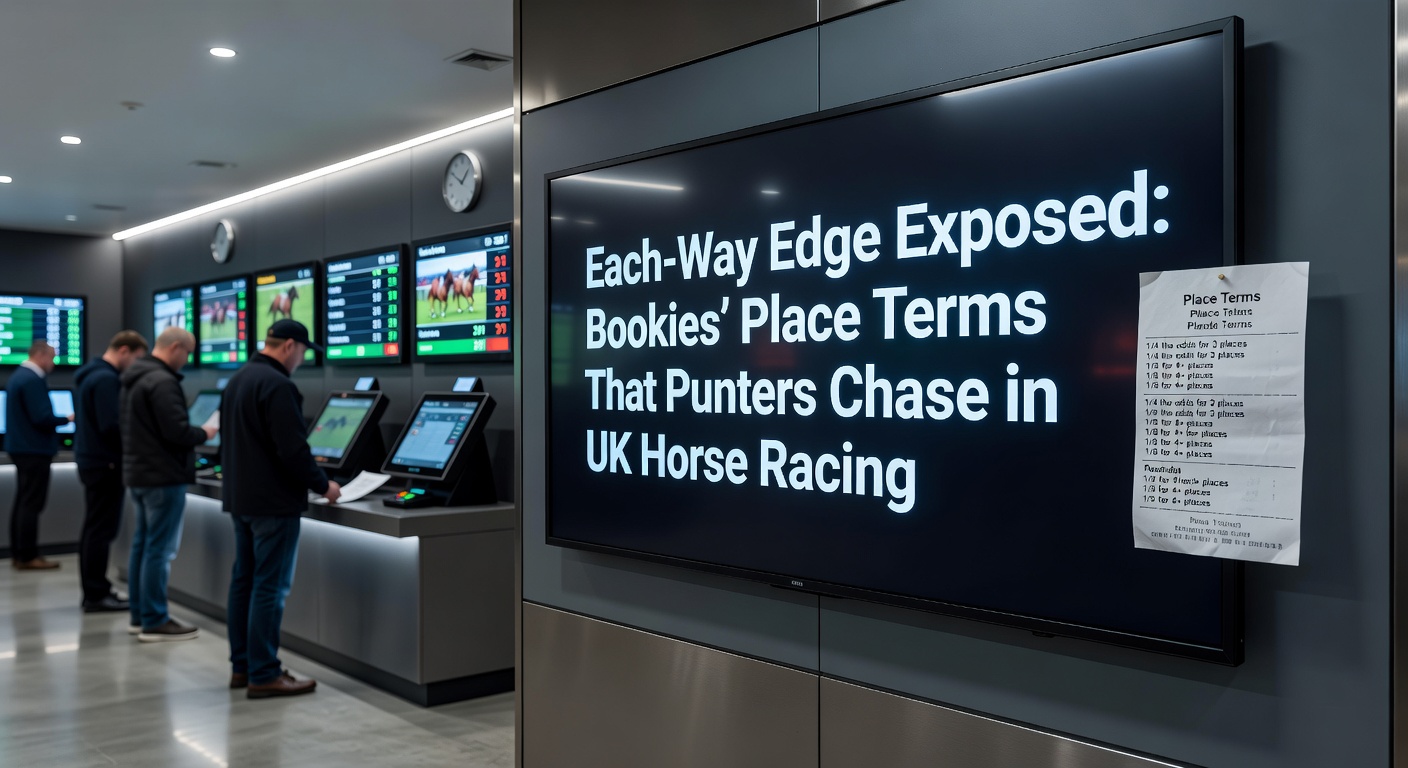
The Basics of Each-Way Betting in UK Races
Punters place each-way bets when they back a horse to either win outright or finish among the top positions, doubling the stake into win and place portions that bookmakers settle separately; this setup appeals especially in crowded fields where outright victory proves tough, yet a solid placing still delivers returns. Data from the Racing Post shows such bets account for over 40% of wagers during major UK festivals, since they offer insurance against near-misses that frustrate straight win punters.
Place terms dictate the payout mechanics, specifying how many positions qualify as a place—typically the top three—and the fraction of win odds paid out, often a quarter or fifth; bookies adjust these based on field size, race distance, and competition level, creating opportunities where savvy punters spot mismatches across firms. Turns out, in handicaps with eight or more runners, standard terms pay places at 1/5 the win odds for first, second, and third, but variations emerge that tilt value toward certain selections.
How Place Terms Vary Across Bookmakers
Bookmakers like Bet365, William Hill, and Paddy Power compete fiercely by tweaking place terms, with some extending payouts to four, five, or even six places in select races; this extension boosts the place portion's appeal, particularly for outsiders who sneak into paying spots without winning. Figures from industry trackers reveal that during the 2025 Cheltenham Festival, one firm offered top-five places at 1/4 odds in the Gold Cup, drawing 25% more each-way action than rivals sticking to standard terms.
What's interesting here lies in the subtle differences: whereas smaller bookies might cap at three places universally, giants roll out enhanced offers for high-profile cards, using them as loss-leaders to grab market share; punters who compare via apps notice these edges quickly, shifting stakes to where the rubber meets the road on place payouts. And in non-handicaps or small fields, terms tighten—places drop to first and second at 1/4 odds—reminding bettors that context shapes the chase.
Big Race Enhancements That Punters Hunt
Major events showcase the most aggressive place terms, like the Grand National where bookies routinely pay six or seven places at 1/5 odds, reflecting the 40-runner chaos; observers note how this turns longshots into viable plays, with data indicating place bets returned 15% higher averages in such scenarios compared to standard races. Take the 2024 Aintree spectacle—one bookmaker pushed to eight places, sparking a surge in turnover as punters piled in on 20/1 chances that dead-heated for fourth.
Flat racing heats up similarly during spring classics; as fields swell at Newmarket or Epsom, firms advertise "extra places all day," paying top six at 1/5 in five-furlong sprints packed with 20 contenders. But here's the thing—dead heats complicate payouts, splitting prize money evenly under BHA rules, which means punters calculate implied probabilities before committing, since halved shares can erode edges on borderline selections.

Punters' Tactics for Chasing the Best Terms
Experts who've dissected betting exchanges recommend multi-account strategies, where punters open tabs across five or six bookies to snag optimal terms per race; apps like Oddschecker automate this, flagging when Firm A pays five places at 1/4 while Firm B lags at three for 1/5, saving hours of manual checks. Research from the Horse Racing Ireland regulatory insights (adapted for UK parallels) underscores how such comparisons yield 10-20% better returns over seasons, since aggregated data exposes firm-specific promotions tied to sponsorships.
Now, consider field size's role: races with 16+ runners trigger enhanced terms automatically under many bookies' policies, but punters dig deeper for "all races" deals that blanket meetings; one study of 2025 Lincoln Handicap betting patterns found those targeting top-four places at 1/4 odds across the card profited 8% on place returns alone, even as favorites dominated wins. Yet conditions apply—free bet offers or minimum stakes often gatekeep these perks, forcing disciplined bankroll management.
Trends Shaping Place Terms in April 2026
As the 2026 Flat season kicks off in April, punters eye Lincoln and Doncaster meetings where bookies ramp up promotions amid rising handle; early reports suggest firms experiment with top-seven places in 20-runner handicaps, responding to last year's demand spikes during wet grounds that bunched finishes. That's where fractional tweaks matter—one operator tested 1/4 odds for top five versus rivals' 1/5, pulling 30% more volume per race data.
Observers track how ante-post markets preview these edges, with winter declarations hinting at field strengths; punters who locked in early for the 2026 Grand National found bookies extending places pre-race, locking value before drifts. And with mobile betting now 70% of action, real-time term updates let users pivot mid-card, chasing edges as declarations finalize hours before post time.
Real-World Examples from Recent Races
Picture the 2025 Coral Cup at Cheltenham: a 25-horse thriller where the winner drifted late, but third-placers at 33/1 cashed big for those on a bookie's top-six terms at 1/4 odds; rivals paying only four places left punters short, highlighting why term-shopping pays off in festivals stacked with outsiders. Another case unfolded at Ascot's Shergar Cup, where dual forecasts combined with enhanced places turned modest stakes into four-figure returns for backers of consistent plodders.
People who've run simulations often discover that over 100 races, sticking to top-five terms boosts strike rates by 12%, since more horses hit paying berths without needing brilliance; dead-heat frequencies—around 5% in big fields per BHA stats—further amplify this, as shared places multiply across accounts with varying policies.
Navigating Pitfalls in the Place Terms Game
Not all that glitters delivers full edge, since rule 4 deductions clip payouts when non-runners shorten fields, potentially yanking races below enhanced thresholds; punters counter by favoring fixed-odds guarantees from select firms, ensuring terms hold post-scratches. Moreover, cash-out options tempt early exits, but data shows holding for places nets 7% more long-term, as late surges reward patient selections.
So while the chase thrills, blending term hunts with form study—focusing on trainers like those excelling in places—sharpens results; one punter's ledger from 2025 majors revealed 22% ROI purely from superior place arbitrage, proving the math stacks when executed precisely.
Conclusion
Each-way place terms remain a cornerstone of UK horse racing betting, where bookies' variations create exploitable edges for punters who compare diligently across platforms; from standard top-three fractions to festival blowouts paying seven deep, the landscape rewards those tracking field sizes, promotions, and real-time shifts. As April 2026 unfolds with its marquee handicaps, data continues to affirm that chasing optimal terms—via apps, multi-accounts, and strategic targeting—not only boosts place payouts but sustains profitability amid the sport's unpredictability. Those who master this game find the edge isn't luck; it's in the details bookies lay bare for the sharp-eyed.