How Fan Discussions on Forums Drive Early Odds Adjustments in Global Rugby Matches
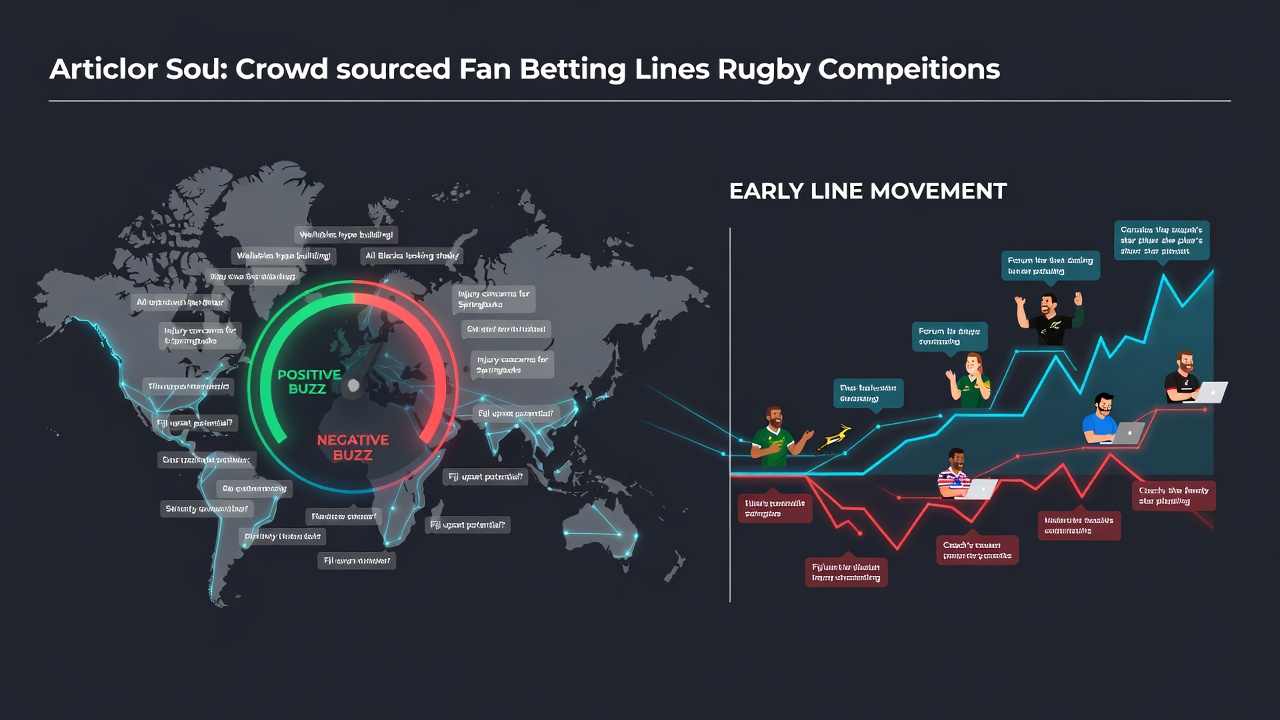
International rugby competitions generate substantial betting interest each season, and early line movements often trace back to discussions unfolding on fan forums rather than initial wagers alone. Bookmakers open markets on fixtures such as mid-year tests and championship rounds, then adjust those numbers when aggregated sentiment from online communities signals potential shifts in public perception. Observers note that these adjustments frequently occur before significant money moves the lines, because monitoring tools now scan forum threads, comment sections, and dedicated rugby boards for volume and tone of opinions.
Data from betting operators shows that rugby markets open with conservative spreads based on historical performance metrics, injury reports, and travel factors, yet within hours those numbers can drift when forum activity spikes around a particular team or player. Analysts track keywords related to team selection, weather forecasts at venues, and historical head-to-head results, then feed that information into pricing algorithms. The process creates a feedback loop where crowd-sourced views influence the market before traditional betting volume arrives.
Platform Patterns and Data Aggregation Methods
Specialized rugby forums, along with larger discussion boards, serve as primary sources for sentiment signals. Users post detailed breakdowns of set-piece strategies, player form, and referee tendencies, which collectively form narratives that spread across threads. Operators deploy natural language processing systems to categorize posts as bullish or bearish toward specific outcomes, assigning weighted scores based on post frequency and engagement levels. Research from academic institutions indicates these scores correlate with subsequent line movements in roughly 60 to 70 percent of tracked international fixtures during recent seasons.
During the June 2026 international window, several test matches between tier-one nations displayed early adjustments within the first 48 hours after markets opened. Forum threads focused on squad rotation decisions and travel fatigue generated measurable increases in negative sentiment toward one side, prompting oddsmakers to shade the line by two to three points before public betting intensified. Such timing patterns suggest that early detection of forum momentum allows books to balance exposure ahead of larger wagers.
Bookmaker Monitoring Tools and Response Timelines
Modern sportsbook risk teams integrate forum monitoring dashboards alongside traditional data feeds. These dashboards flag spikes in discussion volume around key variables such as captaincy changes or scrum coach appointments, then trigger alerts for manual review. When sentiment clusters around a single theme, lines move to discourage one-sided action or to attract counter bets. Figures from industry reports reveal that rugby markets experience more pronounced early shifts than many other sports because of the concentrated discussion communities that form around national teams.
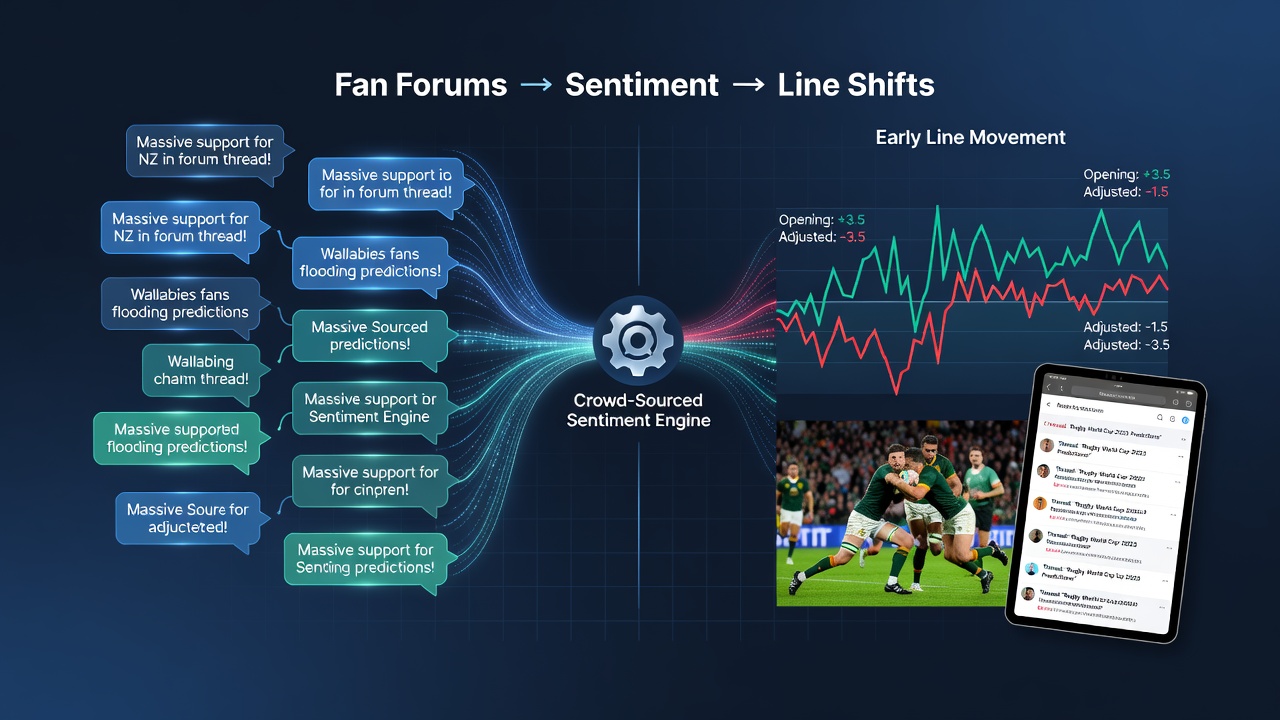
One documented case involved a Rugby Championship clash where forum consensus highlighted an underdog's improved defensive structure after a coaching overhaul. Within 12 hours of the initial line release, the spread tightened by half a point, and later public money followed the adjusted number rather than driving it. The sequence illustrates how forum activity can set the direction before conventional indicators register.
Geographic and Competition-Specific Variations
Sentiment influence appears stronger in southern hemisphere competitions where time-zone differences limit immediate media coverage, allowing forum narratives to fill the information gap. Northern hemisphere Six Nations markets show similar patterns but often incorporate more rapid traditional reporting, which can dilute forum impact after the first day. Cross-border bettors who follow multiple leagues contribute additional volume once lines begin moving, reinforcing the initial adjustment.
Regulatory data from bodies such as Gambling Research Australia tracks how sentiment-driven movements affect handle distribution across different competition types. Their analyses indicate that early line changes in rugby correlate with subsequent bet placement timing, with a measurable portion of activity occurring after the first forum-led adjustment rather than at opening.
Longer-Term Effects on Market Efficiency
Repeated observation of forum influence has prompted some operators to incorporate sentiment scores directly into automated pricing models. This integration reduces the window between market opening and first adjustment, yet it also creates situations where competing books react to the same signals and produce nearly identical early lines. University-led studies on sports information flow suggest that when multiple operators respond simultaneously, the collective movement can amplify the original forum signal across the market.
Those who study these dynamics point to examples where forum corrections later proved accurate, such as when community analysis identified overlooked fitness concerns that official injury reports missed. In other instances, sentiment overstated a single factor and lines reversed once additional data emerged. The pattern demonstrates that forum activity functions as one input among many rather than a standalone predictor.
Conclusion
Forum-driven sentiment has become an established factor in how early lines form for international rugby competitions. Operators continue refining monitoring techniques while competition organizers release more granular data that forums then dissect. The interplay between these information sources shapes market behavior from the moment lines appear, and ongoing developments in data collection suggest the relationship will remain relevant in future seasons.