The Effects of Regional Tax Policies on Operator Profit Margins in Emerging Asian Betting Jurisdictions
Regional tax policies shape operator profit margins across emerging Asian betting jurisdictions where governments balance revenue collection with industry growth, and operators adjust business models accordingly. Data from regulatory filings in 2026 shows tax burdens ranging from single-digit percentages of gross gaming revenue in the Philippines to over 35 percent in parts of Vietnam and certain Indian states, which directly influences net returns after operational costs.
Tax Structures in Key Jurisdictions
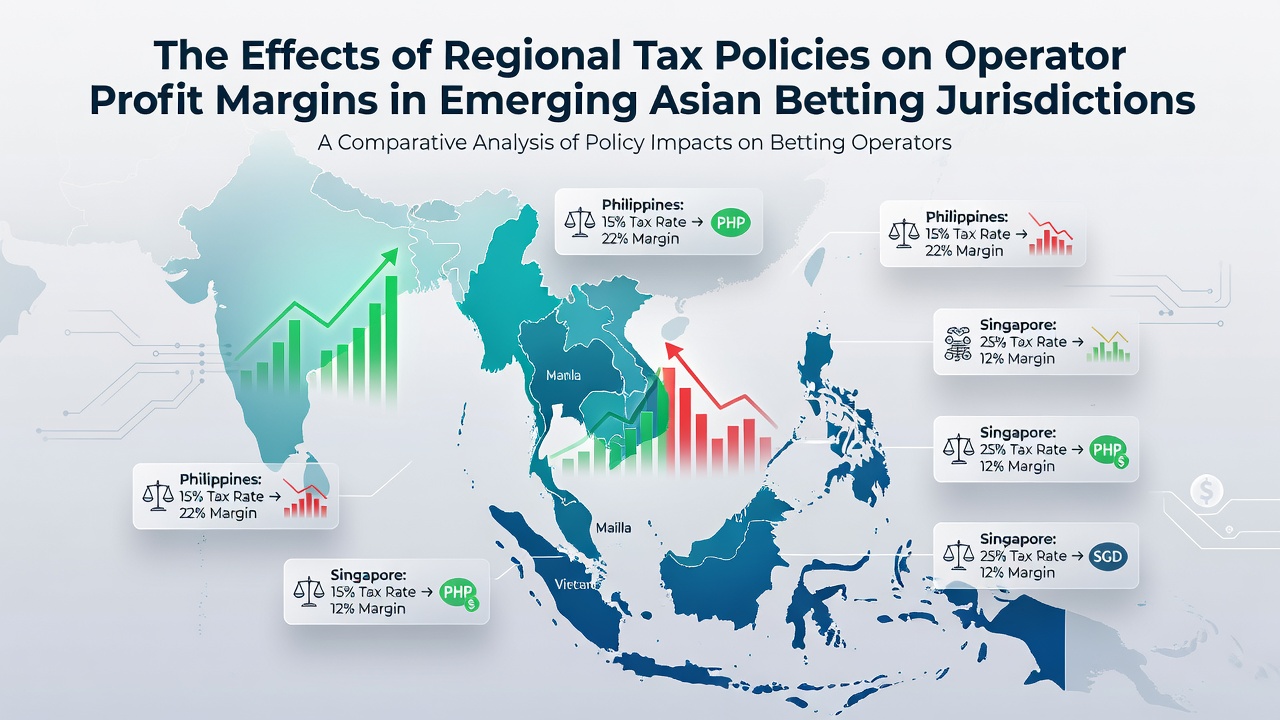
Philippine operators licensed under PAGCOR pay a 5 percent franchise tax plus additional fees that together total around 10 percent of gross gaming revenue, while Vietnam applies tiered rates starting at 30 percent for sports betting and rising higher for casino operations. Malaysian authorities impose a 20 percent gaming tax on licensed operators alongside state-level levies, whereas select Indian states like Sikkim maintain rates near 15 percent but add strict deposit and withdrawal compliance costs. These differences create measurable gaps in after-tax margins, and figures released in August 2026 by regional gaming associations indicate Philippine operators retain 18 to 22 percent net margins compared with 8 to 12 percent in higher-tax Vietnamese markets.
Additional costs such as licensing renewals, responsible gambling contributions, and anti-money laundering compliance further reduce available profit in jurisdictions with overlapping regulatory layers. Operators in multi-state Indian markets often absorb extra audit expenses that push effective tax loads above the headline rate, and research from the National University of Singapore highlights how these cumulative burdens compress returns on capital employed below levels seen in lower-tax environments.
Impact on Profit Margins and Business Decisions
Higher tax rates reduce operator flexibility to offer competitive odds or bonuses, which in turn affects customer acquisition costs and retention metrics. In Vietnam, where combined taxes exceed 35 percent, several operators have reported margin compression that prompted portfolio adjustments toward lower-risk verticals such as lottery-style products rather than live dealer games with higher payout ratios. Philippine firms, operating under lighter tax loads, maintain broader product ranges and allocate more budget to marketing partnerships, resulting in volume growth that offsets the lower per-unit margin.

Capital allocation patterns reflect these pressures, with international groups directing expansion funds toward the Philippines and Malaysia while scaling back commitments in Vietnam until regulatory relief appears. Data compiled by the Asian Betting Association shows average EBITDA margins for licensed operators in low-tax zones holding steady near 25 percent through mid-2026, whereas counterparts in high-tax zones average 14 percent after all statutory deductions. This gap influences merger activity, as larger entities acquire smaller licenses in favorable jurisdictions to diversify tax exposure.
Recent Regulatory Developments
August 2026 brought updated reporting requirements in Malaysia that increased transparency around tax remittances and prompted operators to refine internal forecasting models. Indian state governments continue to debate uniform national frameworks, yet current variations mean operators must maintain separate compliance teams for each jurisdiction, adding fixed costs that further erode margins in smaller markets. Singapore maintains its tightly controlled environment with a 15 percent tax on casino gross gaming revenue, serving as a benchmark that emerging jurisdictions reference when drafting new legislation.
Operators respond by restructuring payment flows and optimizing software platforms to minimize taxable events, though regulators in multiple markets have introduced rules limiting such strategies. Reports from the Philippine Statistics Authority indicate that tax collections from the betting sector rose 12 percent year-over-year through July 2026, reflecting both volume growth and stricter enforcement rather than rate increases.
Case Examples from the Region
One operator group licensed across the Philippines and Vietnam adjusted its 2026 business plan by shifting live casino traffic toward Philippine servers after internal calculations showed a 7 percentage point margin advantage after taxes. In another instance, a Malaysian sportsbook reduced bonus offerings by 40 percent following a state-level tax adjustment, which slowed new account growth but preserved net profitability at prior levels. These adjustments demonstrate how tax policy changes translate into operational decisions that affect both short-term margins and long-term market positioning.
Academic analysis from the University of Melbourne's gambling economics program notes that jurisdictions offering tax incentives tied to infrastructure investment see faster operator scaling and higher reported compliance rates. Such targeted policies have encouraged several firms to build local data centers and training facilities, which generate employment offsets that governments weigh against immediate revenue needs.
Conclusion
Tax policies in emerging Asian betting jurisdictions continue to determine operator profit margins through direct rate effects and indirect compliance costs, with lower-tax environments supporting broader product offerings and higher capital returns. Market participants track regulatory updates closely, and data through August 2026 confirms that margin differentials remain stable across the Philippines, Vietnam, Malaysia, and Indian states despite ongoing policy debates. Operators adapt by reallocating resources toward favorable jurisdictions while maintaining presence in higher-tax markets through product mix adjustments.